




Meer over Stout Beer
Which stout are you looking for?
- Dry or Irish stout: roasted, often coffee-like and dry, and yet remarkably smooth. According to the Brewers Association, the dry, roasted character comes from roasted barley.
- Milk or sweet stout: sweet, full and creamy, and can recall coffee with cream; usually 4–6%. Often made with lactose: milk sugar that brewer's yeast doesn't ferment, so the beer stays sweet.
- Oatmeal stout: made with oats, for a full, silky mouthfeel.
- Foreign extra stout: stronger and fairly dry, quite roasted but without a sharp bite, and firmly bitter.
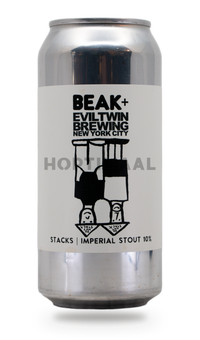
- Imperial stout: intense, with coffee, dark chocolate, licorice or dried fruit. The American version is more bitter and more roasted, the English one maltier, often leaning towards toffee or caramel.
- Pastry stout: strong, sweet and barely bitter, with additions such as chocolate, vanilla, coffee, coconut or marshmallow.
You'll also find barrel-aged stouts under barrel aged. Also see porter.
What you'll find at Hoptimaal
Mostly imperial stouts, a large share of them barrel aged, and alongside those a smaller number of lighter stouts. Breweries you often come across here: Jackie O's, Badlands, Bereta, Clandestin, Põhjala, Brouwerij Kees, Brasserie du Bas-Canada, Third Moon, Tired Hands, Perennial and The Veil. On every beer you see the current Untappd score.
Serving and storing
Too cold dampens aroma and flavour: the stronger and darker the beer, the less cold you serve it. A good starting point: 10–13 °C in an English pint glass, and an imperial stout at the same temperature in a cognac glass. According to the BJCP, imperial stout can age well: over time it can become wine- or port-like, while the aroma can become less intense and the body can decrease. If you want to keep it, store it cool and dark, upright (with a cork: lying down), and ask the brewery for how long.
Frequently asked questions
What is the difference between stout and porter?
Historically, stout was simply a stronger porter. Style guides now draw a line, porter brown and stout black, but in practice they largely overlap.
Is there milk in milk stout?
No milk goes in. Often lactose, though: milk sugar, obtained from whey. In the EU, lactose falls under the allergen milk and must be on the label, unless the name of the beer already clearly refers to milk. Pastry stouts also often contain lactose.
Is a dark stout heavier than a blond beer?
Not necessarily. The colour comes from roasted malt or grains and says nothing about the alcohol. According to the BJCP, an Irish stout has 3.8–5%, a golden tripel 7.5–9.5%. More in the Beer School on stout.
Order before 3 pm on weekdays and we ship the same day. Shipping within the Netherlands is free from €75.
