







Meer over Dubbel
Which dubbel are you looking for?
- Trappist: a protected origin label that only Trappist abbeys may use. The modern dubbel originated in the 1920s at Westmalle. You'll find beer from Trappist abbeys under trappist.
- From a regular brewery: dubbel is a style, so regular breweries make it too.
- Heavier: quadrupel, according to the BJCP a bigger dubbel with more body and malt richness.
- Same strength, but blond: a blond has roughly the strength and balance of a dubbel, but it is golden and lacks the dark malt flavours.
What to look for: in the aroma, rich malt with hints of chocolate, caramelised sugar or toast, never anything roasted or burnt, plus raisin, plum and a light to moderate, peppery spiciness. Spices are not customary. In many traditional versions the malt recipe is fairly simple: caramelised sugar syrup or unrefined sugars and a spicy-fruity Belgian yeast provide much of the complexity (more about malt). In the glass, a dubbel is dark amber to copper with a reddish glow, under a dense, cream-coloured head. Related styles: bock and brown ale.
What you'll find at Hoptimaal
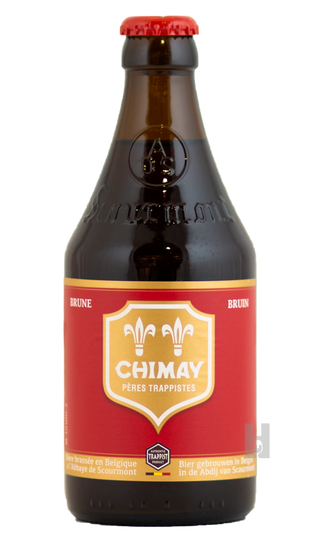
Mainly Belgian dubbels: from Westmalle and Chimay, two of the Trappist abbeys with the ATP label, to Het Anker, Ter Dolen, Val-Dieu, Lupulus, Deca and Kompel. From the Netherlands, among others, Katuiner, from Amersfoort like us, and Het Platte Harnas from Barneveld. In the top 10 you can see which dubbels customers buy most often right now. For every beer you see the current Untappd score.
Serving and food
A good starting point: Westmalle recommends drinking Trappist beers like its own at between 6 and 12 °C. For its Dubbel, Westmalle advises leaving the bottle upright for a week at 8–14 °C, pouring calmly into a chalice glass and leaving about a centimetre in the bottle: that is the yeast sediment, which you can drink separately. A dubbel traditionally gets its carbonation through bottle conditioning, so that layer of yeast is part of it. With food, Westmalle recommends its Dubbel with a stew or grilled meat.
Buy dubbel beer at Hoptimaal
At Hoptimaal you buy dubbel beer online or in our shop at Leeghwater 5 in Amersfoort. It's a small selection, mainly Belgian, and you order your dubbels individually. Order before 3 pm on working days and we ship the same day. Shipping within the Netherlands is free from €75.
If you take more than one, store them the way Westmalle recommends for its Dubbel: upright, dark and at a constant 2–5 °C.
Frequently asked questions
What is the difference between a dubbel and a quadrupel?
According to the BJCP, a quadrupel is a bigger dubbel, with more body and malt richness. It is also stronger: the BJCP gives a dubbel 6–7.6% alcohol and a quad 8–12%.
Why is a dubbel called dubbel?
That is not known for certain. The number of fermentations does not explain it: Westmalle gives its Extra, Dubbel and Tripel the same treatment, one primary fermentation in the tank and a refermentation in the bottle. Westmalle itself explains the name with a doubling of the malt or the ingredients; that is the brewery's story, we did not see an independent archive document.
Can you still drink a dubbel after the best-before date?
Often, yes. According to Westmalle, darker beer such as its Dubbel can often still be drunk after the best-before date; the taste then becomes softer because hop aroma and bitterness decline. Best-before is a quality date: after that date beer is usually not spoiled. More in the Beer School on dubbel.
Do you also have Dutch dubbels?
Yes. Besides the Belgian dubbels, you'll find dubbels from Katuiner, Het Platte Harnas, EemBier and the Trappist brewery De Koningshoeven (La Trappe), among others. If you only want to see the Dutch ones, filter by country.
