





Meer over Zuur
Which sour beer are you looking for?
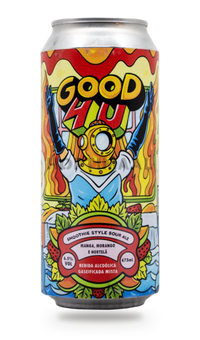
- Smoothie sour: thick, fruity and sweet-sour, full of fruit purée that no longer ferments. Most of our sour beers are a smoothie or pastry sour.
- Fruited sour: sour beer with fruit. If the fruit sugars ferment, the beer actually becomes drier, and so less sweet than a smoothie sour.
- Berliner Weisse: light (according to the BJCP 2.8–3.8%), very pale, with a clean sourness and lots of carbonation.
- Gose: hazy, tart wheat beer with a pinch of salt and coriander, less sharply sour than Berliner Weisse. More in the Beer School on gose.
- Flemish red and oud bruin: reddish-brown to dark, fruity and often sweet-sour, matured for a long time and often blended with young beer. More about Flemish red and oud bruin.
- Lambic, gueuze and kriek: lambic is spontaneously fermented beer from the region around Brussels, matured in wooden barrels for one to three years. Gueuze is a blend of young and old lambic, and a classic kriek is lambic with sour cherries. We don't always have these in stock. More about lambic and gueuze and kriek.
How does beer become sour?
The sourness comes from organic acids such as lactic acid, made by bacteria that are unwanted in other beers. Roughly speaking, there are four routes: spontaneous fermentation as with lambic, souring before fermentation (with kettle souring usually in one to three days), souring during fermentation, and maturing in wooden barrels, where the wild yeast Brettanomyces can also play a part. That is why the flavours differ so widely. Looking for sour beer that matured in wood? Then choose Barrel Aged in the filters.
What you'll find at Hoptimaal
Mostly modern sours from breweries such as Ārpus from Latvia, Tuletorn and Pühaste from Estonia, Vault City from Scotland, Funky Fluid from Poland, Clef from Slovenia, Hop Hooligans from Romania and Frontaal from the Netherlands. Also Flemish red from brewery Verhaeghe. For every beer you can see the current Untappd rating.
Serving and storing
Serve sour beer cool and in a glass. A good starting point for gose is 4–10 °C in a flute glass, and for kriek 7–10 °C in a tulip glass (CraftBeer.com by the Brewers Association). A smoothie sour contains unfermented fruit: if the can says 'keep refrigerated', leave it in the fridge until you pour it.
Buy sour beer at Hoptimaal
At Hoptimaal you buy sour beer online or in our shop at Leeghwater 5 in Amersfoort, from smoothie sours to Flemish red. You order your sours per piece, so it's easy to try a few kinds side by side. Order before 3 pm on working days and we ship the same day. Shipping within the Netherlands is free from €75.
Frequently asked questions
Is sour beer spoiled beer?
No. In sour beer the brewer has made the sourness deliberately, with lactic acid bacteria and sometimes wild yeast. In most beers those bacteria are unwanted; here they belong. A dominant vinegar taste, however, counts as a flaw in the classic styles.
What is the difference between gose and Berliner Weisse?
Both are light, tart and fizzy. Gose is hazy and has a pinch of salt and coriander; according to the BJCP the sourness is less sharp than in Berliner Weisse. Berliner Weisse is very pale, with a clean sourness and, according to the BJCP, 2.8–3.8% alcohol.
Is there lactose in sour beer?
Sometimes, especially in smoothie and pastry sours. It is not a style rule, so not every sour beer contains it. In the EU, lactose falls under the allergen milk and must then be on the label. More in the Beer School on sour beer.
