

Shipping to 30+ countries

Shipping

Hoptimaal offers a wide variety of beers both in-store and online. If you can place an order, we usually have the product in stock (though mistakes can happen, unfortunately). Products that are in stock will be shipped the same day if ordered before 3:00 PM.

If we make an error with stock levels, you will be notified within 24 hours. In that email, we will offer you an alternative product, the right to a full refund, and a new delivery time. It's up to you how you'd like us to resolve the issue.

We ship all orders with DPD from the Netherlands. You can choose between:

  • Home delivery or delivery to your work
  • Delivery to a DPD pickup point near you

Shipping costs and the free-shipping threshold for your country are in the table below.

Deposit

On cans and bottles we charge the Dutch deposit (statiegeld): €0.15 per can and €0.10 per bottle (a little more for some bottles). It shows as a separate line in your cart. The deposit belongs to the Dutch deposit system: you can return the packaging in the Netherlands, not in deposit machines in other countries.

Shipping Costs by Country

Scroll to the right on mobile ->

CountryShipping costReduced rateFree shipping from
Netherlandspickup point €6.95
home €8.50
–€85
Belgium€8.95–€100
Germany€13.50–€100
Denmark€15.95–€150
Austria€15.95–€150
Bulgaria€47.50€25 from €150not available
Estonia€17.50–€150
Finlandpickup point €24.95
home €29.95
home: €10 from €200pickup point €200
home €250
France€16.95–€150
Greece€29.50€15 from €150not available
Hungary€21.95€10 from €150€200
Ireland€15.95–€150
Italy€16.95–€150
Croatia€47.50€25 from €150not available
Latvia€17.50–€150
Lithuania€21.95€10 from €150€200
Luxembourg€12.95–€150
Poland€15.95–€150
Portugal€19.95€10 from €150€200
Romania€27.50€10 from €150not available
Spain€18.75–€150
Czech Republic€15.95–€150
Swedenpickup point €24.95
home €29.95
home: €10 from €200pickup point €200
home €250
Norway*Coming soon
United Kingdom*Coming soon
Switzerland*Coming soon

Delivery

DPD generally delivers within 24 hours after receiving the parcel. So if we have received your order before 15:00 on working days, in 99% of cases you will have your order at home the next day. It may sometimes happen that they need one day longer. You can follow this via the Track & Trace details you receive from us, so you can see exactly where your order is. DPD also gives you a time window of 2 to 4 hours in which your order will be delivered. Not at home? No problem! You can indicate yourself whether you want them to come by again tomorrow or whether they should deliver it to the nearest post office.

Do you have a question about the delivery of your beer? Feel free to contact us: customer service.

Returns

You have a cooling-off period of 14 days after you have received the product. Within this period you can register the product for return. After you register your return, we email you a free return label. Returning is free: we provide the return label and the shipping costs of your return are at our expense. After registering your return, you have another 14 days to send the product back. If you bought multiple items at once, the period starts after receipt of your last item.

How do I return or exchange a product?

  • Fill in the return form within 14 days after receipt. If you are unable to print the return form, please write at least the order number and your name on a piece of paper and include it with your return.
  • Register your return with our customer service. You can do this by sending an email to: info@hoptimaal.nl or by calling 085 -130 1591. We will then email you the free return label.
  • After registering your return, you have another 14 days to send the product back.
  • Then send your return back in its original condition and with the packaging. Products that are damaged or incomplete are not eligible for exchange or refund.

Please note: after the 14-day cooling-off period it is no longer possible to return your product.

What can you expect after returning your product?

After receiving your return, you will receive a confirmation from us. This can take 3 working days, but in general we process your return on the day we receive it. We will check your return to see whether your product meets our return conditions and will then get to work on the solution you want.

Do you want your money back?

  • We will refund the purchase amount within 3 working days after confirmation of receipt to the account with which you paid. If you want to receive the purchase amount in another way, please contact us about the possibilities.
  • In case of visible signs of use, missing accessories or missing packaging, you are no longer entitled to a refund. If the packaging is not returned entirely in its original condition, we won't make a fuss and you will in any case get 75% of the purchase amount back. This is very rarely the case; usually the full purchase amount is simply refunded.

Do you want to receive a new product?

After receiving your return, we will send the new product right away. If the product is no longer in stock, we will refund the purchase amount to the account with which you paid.

  • Is the new product cheaper? The remaining amount will be refunded to your account within 3 working days.
  • Is the new product more expensive? You will receive a payment request for the remaining amount. After receipt of payment, we will send the product immediately.
  • Do you want to receive the new product at a different address or on a different day? Please contact us.

Exceptions

Beer that has been opened will not be taken back. We also do not take back beer that you ordered at a discount because the shelf life is almost expired. Of course we state this clearly on the product page, so that you are not surprised by a limited best-before date.

The item may be returned to the address below:

Hoptimaal
Leeghwater 5
3825MR Amersfoort
Netherlands

Order before 3:00 PM on weekdays, shipped today.
Break-proof packaging

Your beers are always carefully packaged. If there is any damage during transit, we offer a guarantee. Not satisfied, money back.

Your cart (1)

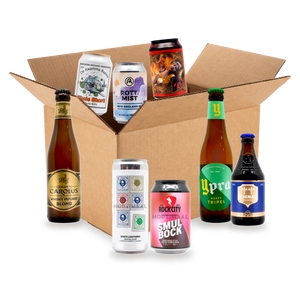
Discovery Box Low Alcohol

16,95
Unit price
per

Only 4 left!

Andere kochten ook

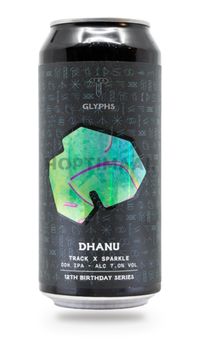
Track Dhanu

10,95

Beer School · Dark & Creamy

Brown Ale

Brown ale is a brown, malty beer with notes of caramel, nuts, toffee or a hint of chocolate, without the pronounced roasted character of a porter. The English version is soft and balanced, the American one hoppier.

  • Alcoholusually 4.2–6.2%; London brown ale is lighter, 2.8–3.6%
  • Entry levelEasy to start with

How it usually tastes

Bitter
Sweet
Sour
Roasted
Fruity
Full

Average for this style; every beer has its own accent.

What is it?

With brown ale it is all about the malt. The British version is soft to moderately malt-sweet, with caramel and often nuts, toast, biscuit, toffee or a hint of chocolate. The bitterness is medium to fairly low, the hops at most slightly floral or earthy, and the finish medium-dry to dry. A pronounced roasted flavour as in porter does not belong.

The main variants: - British brown ale (the Newcastle type): usually a bit stronger than the average British beer, and nowadays mainly a bottled beer. - London brown ale: sweet and low in alcohol, with deep caramel or toffee and little bitterness. According to the BJCP a historical style that has almost disappeared. - American brown ale: more bitter and usually hoppier, with chocolate, caramel, nuts or toast and American hops that sometimes smell citrusy, fruity or tropical. Malt and hops are usually equally present, and it usually has somewhat more alcohol than the English version.

Note: the style guides differ in the details. The Brewers Association allows some roasted malt in brown ale, whereas the BJCP wants no roasted character reminiscent of porter or stout. For the bitterness of American brown ale the BJCP gives 20–30 IBU, the BA 30–45 IBU.

Myth or fact?

Myth

‘Brown ale is a centuries-old English beer style that has always stayed the same.’

The name is old, but the modern brown ale is a 20th-century creation, which began with bottled beers such as those of Mann's (1902).

Myth

‘Brown ale is a centuries-old English beer style that has always stayed the same.’

The BJCP writes that brown ale has a long history in Great Britain, but that the name was used in different periods for different products. The modern brown ale 'is a 20th century creation; it is not the same as historical products with the same name.'

Beer historian Martyn Cornell places the re-emergence of brown ale in Great Britain at the beginning of the 20th century. The London brewery Mann's released a bottled, sweet brown ale in 1902; according to Ron Pattinson, Mann's can 'claim to be the first (modern) Brown Ale'. Newcastle Brown Ale followed in 1927, according to an advertisement from the brewery itself.

Afterwards, too, the strength varied widely. In the 1950s most British brown ales had only about 3% alcohol, while Newcastle Brown had just over 5%. The sweet London variant is, according to the BJCP, now a historical style that is 'nearly extinct'.

Sources

Partly true

‘Brown ale is always sweet.’

The London brown ale really is sweet, but the better-known British brown ale (the Newcastle type) has a medium-dry to dry finish, and the American version is hoppier and more bitter.

Partly true

‘Brown ale is always sweet.’

Part of it is right. The London brown ale is, according to the BJCP, 'luscious, sweet', with a sweet finish, and commercial versions are sometimes sweetened after fermentation. But that style has almost disappeared.

The modern British brown ale, such as the Newcastle type, has, according to the BJCP, 'gentle to moderate malt sweetness', but a medium-dry to dry finish. In the older BJCP classification of 2008 the northern variant was even called 'drier and more hop-oriented' than the southern one.

The American brown ale goes further still: medium to fairly high bitterness, with hops that sometimes smell of citrus or tropical fruit. The Brewers Association gives 30–45 IBU for that style, the BJCP 20–30 IBU.

How sweet a brown ale is therefore depends strongly on the variant.

Sources

Myth

‘Brown ale is just a light porter.’

Brown ale is about caramel, nuts and toffee, not about the pronounced roasted character of porter.

Myth

‘Brown ale is just a light porter.’

The BJCP describes British brown ale as a malty, caramel-like brown ale 'without the roasted flavors of a Porter'. For the American brown ale, too, according to the BJCP, there should be no roasted character reminiscent of porter or stout. Instead you taste caramel, nuts, toast, toffee and sometimes a hint of chocolate.

The Brewers Association is somewhat broader and does allow some roasted malt in brown ales.

That brown ale, dark mild and English porter are in one category at the BJCP is only because they resemble each other in judging. It does not say that one style is a lighter version of the other.

Anyone who likes brown ale and is looking for more roasted flavour can certainly see porter as a logical next step.

Sources

Myth

‘Dark beer is heavier and stronger than blond beer.’

Colour is no measure of alcohol: beer gets dark from roasted or darkly kilned malt. A black Irish stout usually has less alcohol than a golden-yellow tripel.

Myth

‘Dark beer is heavier and stronger than blond beer.’

The colour of beer comes mainly from the grain. The more caramelised, roasted or darkly kilned malt the brewer uses, the darker the beer. CraftBeer.com of the Brewers Association expressly adds that colour does not equal alcohol content or mouthfeel. A quality guide of the Brewers Association for the trade also writes that colour sometimes suggests strength, but often wrongly.

The style guidelines show it in black and white. An Irish stout is black from dark roasted malt or barley, but according to the BJCP has 3.8–5.0% alcohol. A Belgian tripel is deep yellow to light amber and has 7.5–9.5%. The Brewers Association gives the same picture: a dry Irish stout has 4.1–5.3% at a colour of 80+ EBC (black), a tripel 7.1–10.1% at 8–18 EBC (pale). Such a stout does not have to be heavy either: the BJCP calls it remarkably smooth, with a medium-light to medium-full body.

Of course there are also dark beers that are strong, such as imperial stout (8–12% according to the BJCP). That is due to the amount of sugar that was fermented, not to the colour.

Sources

Where does it come from?

The name brown ale is old, but in Great Britain it was used at different moments for different beers. According to the BJCP the modern brown ale is a 20th-century creation. In the early 20th century brown ale turned up again: in 1902 the London brewery Mann's released a sweet, bottled brown ale. According to beer historian Ron Pattinson, Mann's can call itself the first modern brown ale.

According to an advertisement from the brewery itself, Newcastle Brown Ale was first brewed in 1927. In the 1950s brown ale was very popular in Great Britain; the advertisements were mainly about bottles for home. Most of them then had about 3% alcohol; Newcastle Brown had just over 5%.

In the US, Martyn Cornell found advertisements for 'nut brown ale' from 1906. The modern American brown ale became known from the mid-1980s through Pete's Wicked Ale. According to Jeff Alworth, the company behind it was until the late 1990s the second-largest American craft brewery, with this brown ale as its flagship.

How to pour it

A good starting point: 7–13 °C. We found no guideline of its own for brown ale; this is the general suggestion of the American Homebrewers Association for stout and porter.

Taste it yourself

All Brown Ale in the shop
Did you like this? Then try Porter →

Similar to: Amber, Dubbel

Terms

Malt
Grain, usually barley but for example also wheat, that has been steeped, germinated and dried so that sugars become available for the yeast; the more strongly the malt is roasted, the darker the beer.
Hops
The cone-shaped flowers of the female hop plant (Humulus lupulus), which give beer bitterness, aroma and flavour and inhibit bacteria.
Finish
The flavour and aroma that linger after you have swallowed the beer, for example a long-lingering bitterness.
Sources for this page